Apr 27, 2014

New Evening Study Centre


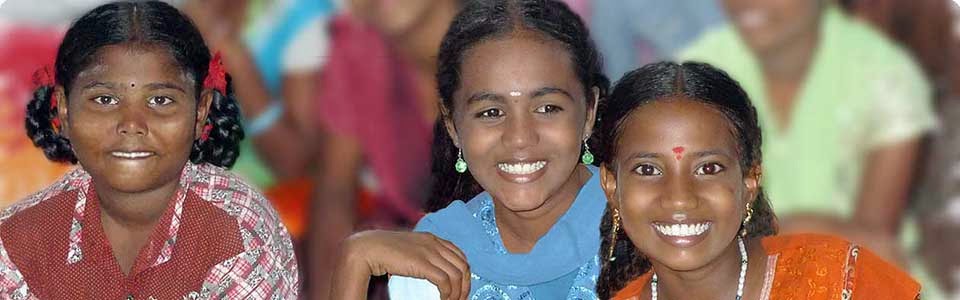
These beautiful girls are from a Dalit Colony (Untouchables), despised by society and separated
even from the rest of their village. Last month we started an evening study center
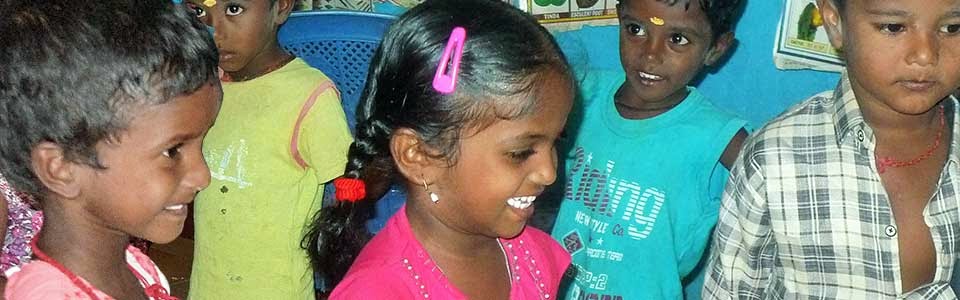
in their colony. They and the other children in their colony will receive regular help with their
studies, and enouragement to finish high school. Education can provide them a chance at a better
life, (especially as girls,) and a path out of extreme poverty. Here our program coordinator,
Nelson, is distributing stationary supplies to them, donated by a local company.

Apr 3, 2014

Meetings for pregnant and new mothers

We are continuing to visit different villages to hold awareness programs with mothers. At our latest meeting, we learned that the average birth weight of the children was 2 to 2.5 kg (4.5 to 5.5 lbs.) indicating lack of nutrition during their pregnancy. Also several mothers were giving cows milk to their babies which was causing them to be sick often .  They were explained the importance of nutrition and breast-feeding, and encouraged to take children for their regular medical check-ups at the local government clinic.


Mar 7, 2014

Meena Stories

Meena stories are colourful comic books, produced by UNICEF. Meena is a fictional character, a young girl growing up in rural India,  who educates the children of South Asia on issues of gender, health, and social inequality through her stories in comic books. These have not yet been translated in Tamil so HopeReach has undertaken the task of translating them. They are proving to be an invaluable tool for our awareness programs and the young people who attend the awareness programs with love them. 


Mar 5, 2014

Awareness Programs

We have started awareness programs in the villages where we have tuition centres. The first topics we covered are health and hygiene, and importance of education. For these meetings we have undertaken to translate into Tamil the Meena comic books produced by UNICEF. Meena is a fictional character who educates the children of South Asia on issues of gender, health, and social inequality through her stories in comic books.


Feb 20, 2014

Assistance for Village Nursery Schools

After setting up a good preschool program in the Mercy Home, we decided to see how the local village nursery schools (angnwadis) were doing. We discovered that they had little or no supplies, and the children mostly just lay around listlessly on the floor waiting for the midday meal supplied by the government. The situation demanded action. We obtained permission from relevant government authorities to start helping the anganwadis with educational materials and to send in a volunteer once of twice a week to do fun educational activities with the children, and to train the regular carers.


Nov 26, 2013

Free Medical Camp

Last Saturday, we held another medical camp at the SHE centre, this time a general health camp, with doctors from Madurai who volunteered their time and also provided medicines
for the camp.
PHOTOS: A villager who attended with his daughter; one of the doctors examining patients; old village lady; patients queuing rather eagerly; audio advertising with an auto rickshaw. 


Feb 4, 2012

Article on the Status of the Girl Child in India

The following article appeared in today's edition of the New Indian Express newspaper.

Neglecting girl child a shame to India’s past
The New Indian Express

That the badge of being ancient civilisations cannot always be worn with pride by India and China is evident from the finding of the United Nations Department of Economic and Social Affairs that even in the 21st century the female infant mortality rate in these two countries is higher than that of the male infant mortality rate. Not only that, this dubious distinction was ‘achieved’ when the figures were compared with 148 other countries. What is distressing about such statistics is that not only has the advent of the modern, supposedly more enlightened, age failed to improve the condition of girls, but has even caused a worsening as the falling male-female ratio in India shows.

Female foeticide is a main reason for the skewed ratio which can have damaging social consequences. Yet, the fact that it is the well-to-do who indulge in this patent illegality shows how little awareness there is even among the educated classes of either the moral or the social imperatives. Such brazenness is even more shocking than the desperate acts of the poor who often kill their infant girls or abandon them because they look upon the female child as a financial burden. As the continuing instances of dowry deaths have shown, laws are not a solution to the deep-rooted problem, which is related to a traditional bias against women who are expected to remain subservient to their fathers in childhood, husbands in their youth and sons in old age.

If the Pre-conception and Pre-natal Diagnostics Techniques (Prohibition of Sex Selection) Act has not been a notable success, the reason is the hidden social sanction for preventing the birth of a girl child. Hence, the mushrooming of illegal clinics where sex determination tests are done. In addition to further strengthening the punishment for families opting for such tests, it is the overall uplift of the status of women that can save the girl in the womb and ensure her well-being in later life.